My Accomplishments
Sprint 1
This sprint, I learned how to:
- Use tools: VSCode, GitHub, GitHub Pages, Make
- Build Github Pages Sites: Team GitHub Pages site + my own portfolio site
- Document Everything: Write blog posts or issues in Github showing what I learned and struggled with
Learning how to set up a repository in VScode was very important learning, as I use it for every edit I make.
./scripts/activate_macos.sh
./scripts/activate.sh # prompts for Git UID and Personal Email
./scripts/venv.sh
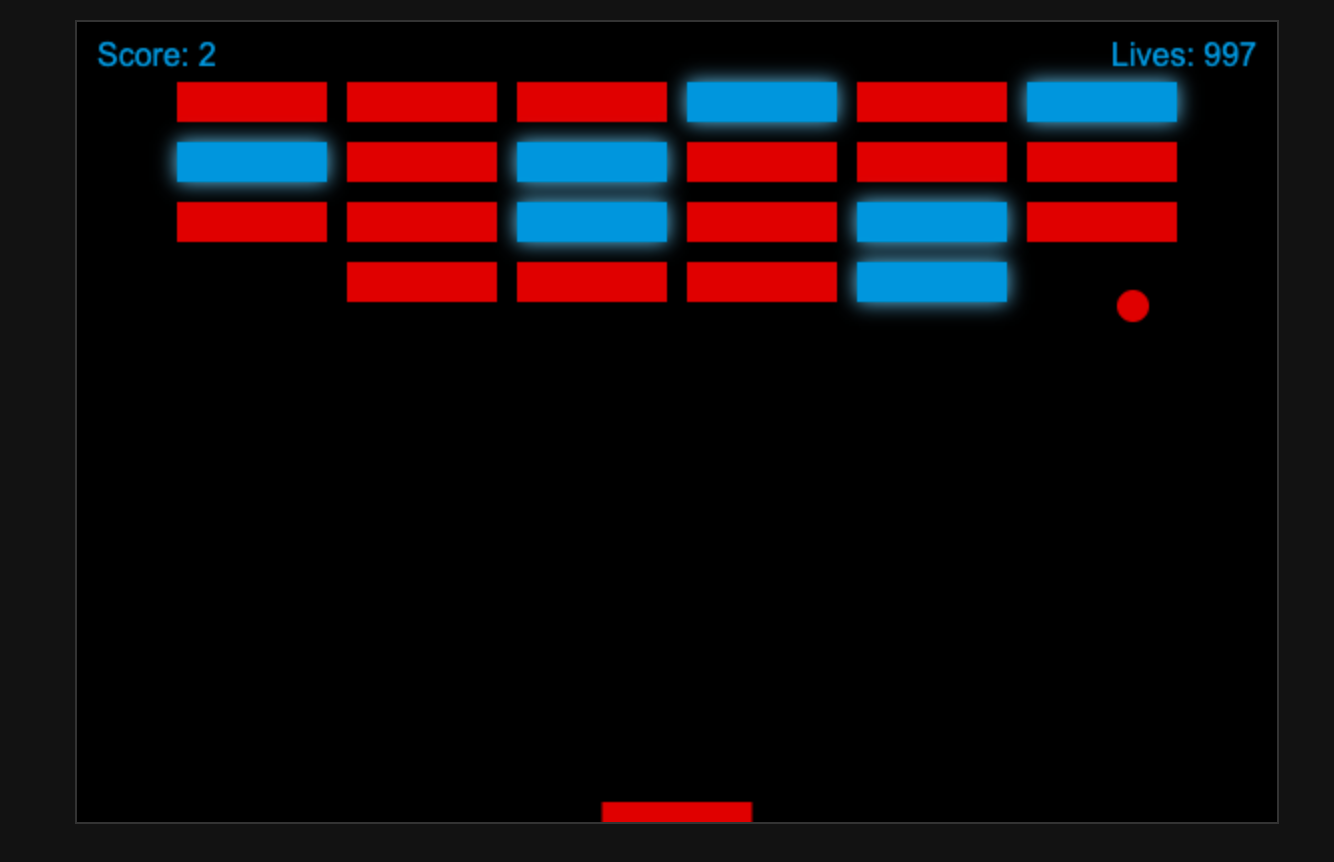
I also created some game hacks for games such as Snake and Breakout, visible down on the index page.
Sprint 2
Here’s what I learned from team teaches:
Strings (P2): Strings are sequences of characters used to store and manipulate text in JavaScript (like combining, slicing, or changing case).
Mathematical Expressions (P2): These use operators like +, -, *, /, and % to perform calculations and evaluate numeric results.
Booleans (P2): Booleans represent true or false values and are often used in comparisons and decision-making.
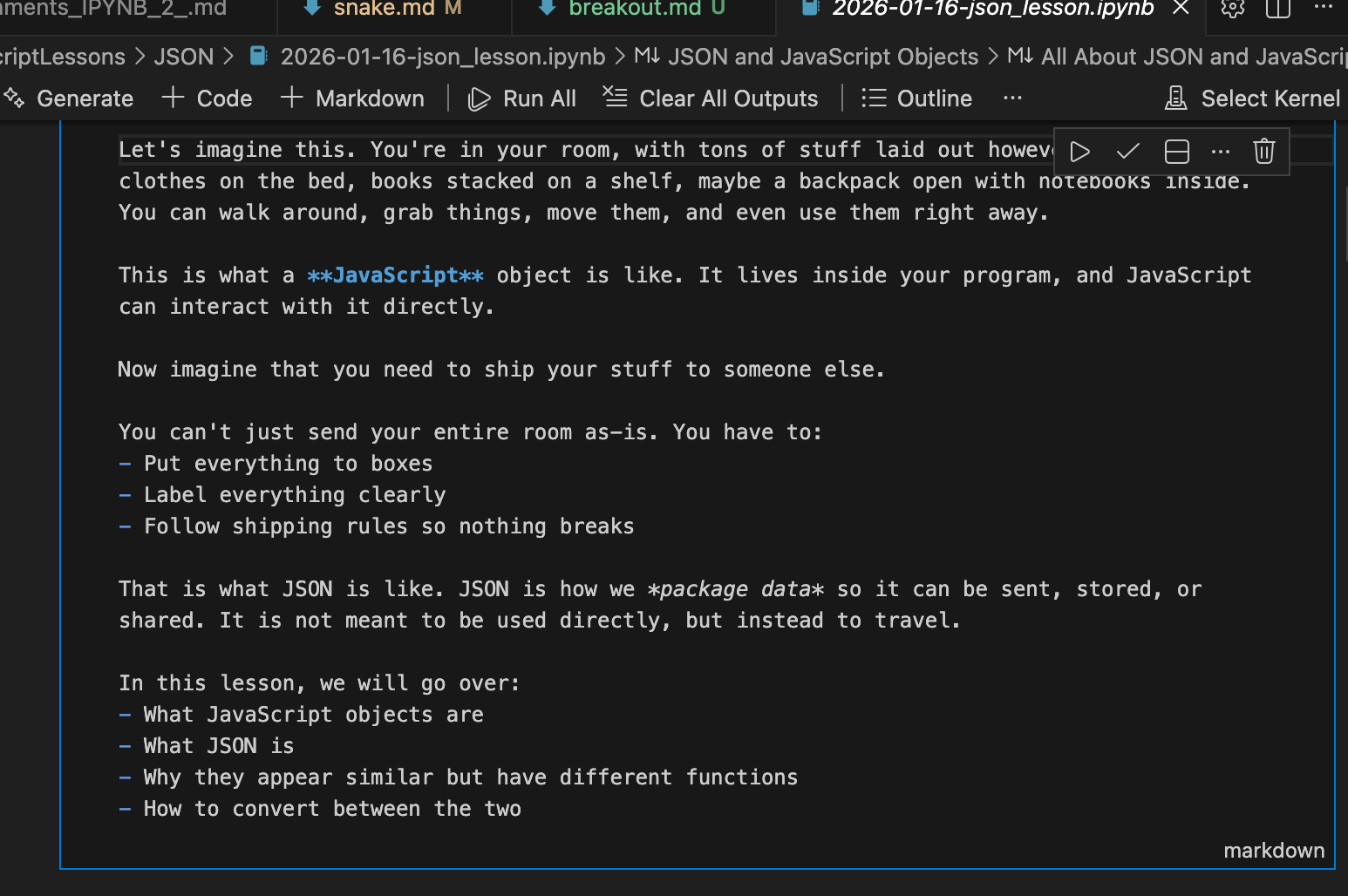
JSON and JavaScript Objects (P2): Objects store data in key-value pairs, and JSON is a text format used to store and transfer structured data.
Nested Conditionals (P2): These are if statements inside other if statements, allowing more complex decision-making.
Iterations (P2): Iterations use loops (like for or while) to repeat code multiple times.
Data Abstraction (P2): Data abstraction organizes and simplifies complex data, often using functions or objects to make code cleaner and reusable.
Arrays (P2): Arrays store multiple values in a single variable and allow you to access them by index.
Conditionals (P2): Conditionals (if, else if, else) allow your program to make decisions based on certain conditions.
Functions (P2): Functions are reusable blocks of code that perform specific tasks and can take inputs (parameters) and return outputs.
I also learned how to work in Jupyter notebooks and work with teammates when creating a lesson.
Sprint 3
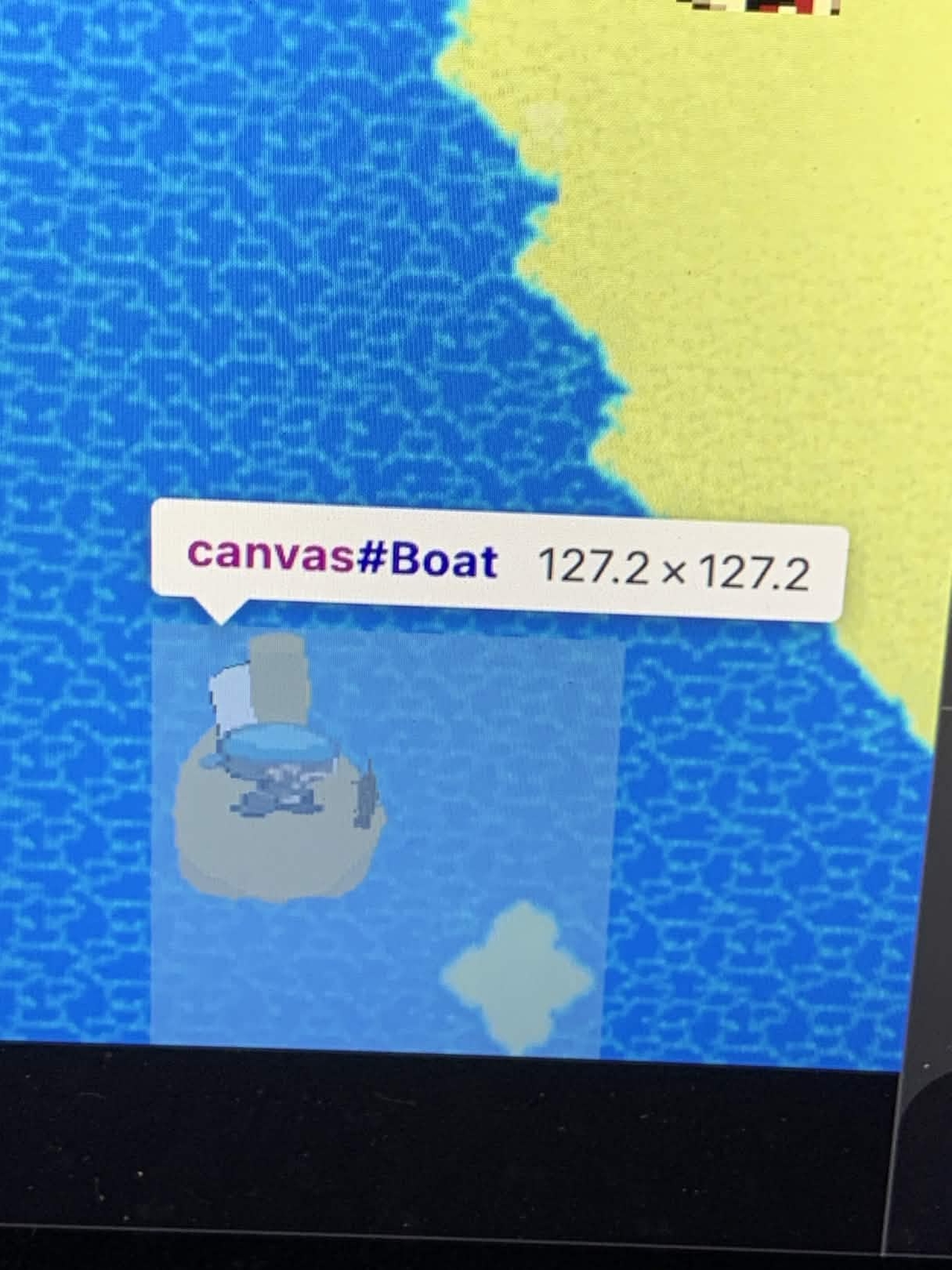
For this sprint, my group and I created an RPG game using the Game Runner and GameEngine framework. I learned how the game architecture works, including how the canvas is created, styled, and controlled with Start, Pause, Stop, and Reset buttons. I understood how levels are structured using classes with constructors that define the background, player, NPCs, and other game objects stored in the this.classes array.
While building our RPG, I practiced object-oriented programming by working with classes for players, environments, and interactions. I learned how the game loop updates and renders objects, how keyboard input controls movement (WASD/arrow keys), and how interactions are triggered with keys like E or Enter.
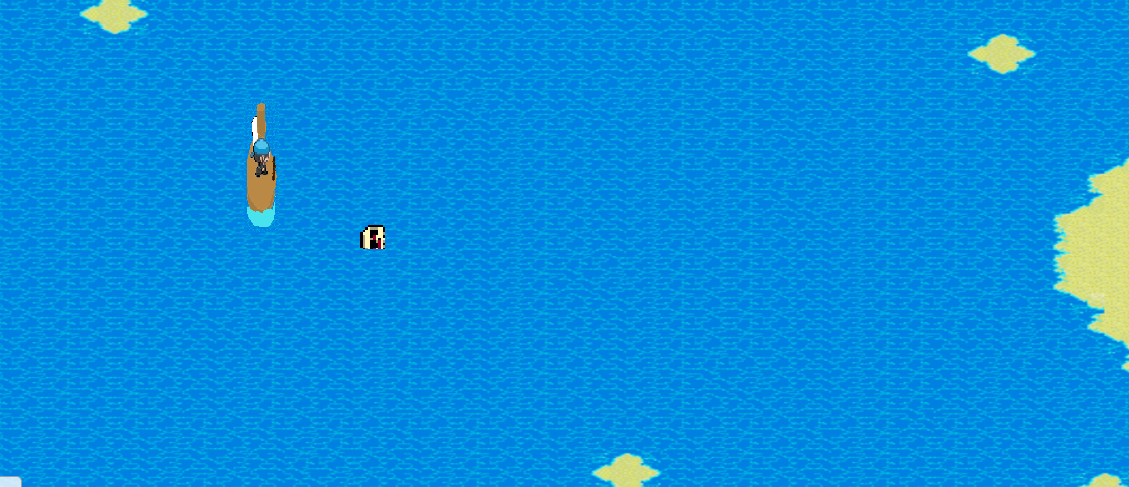 I also gained experience debugging using the browser console, fixing import/export errors, adjusting player speed and position, and making sure assets loaded correctly. Overall, this sprint helped me better understand game mechanics like collision detection, sprite animation, event handling, and state management while collaborating with a team to design a functional RPG game.